Why Meeting Pods Are Becoming Essential in Flexible Offices – And Why They Deliver a Strong Return on Investment
The evolution of the flexible office market has changed what occupiers expect from their workspace. Today's customers no longer judge a workspace simply by the quality of its desks or offices. They increasingly evaluate how well a building supports different styles of working - from confidential phone calls and video meetings to collaborative brainstorming sessions and focused individual work.
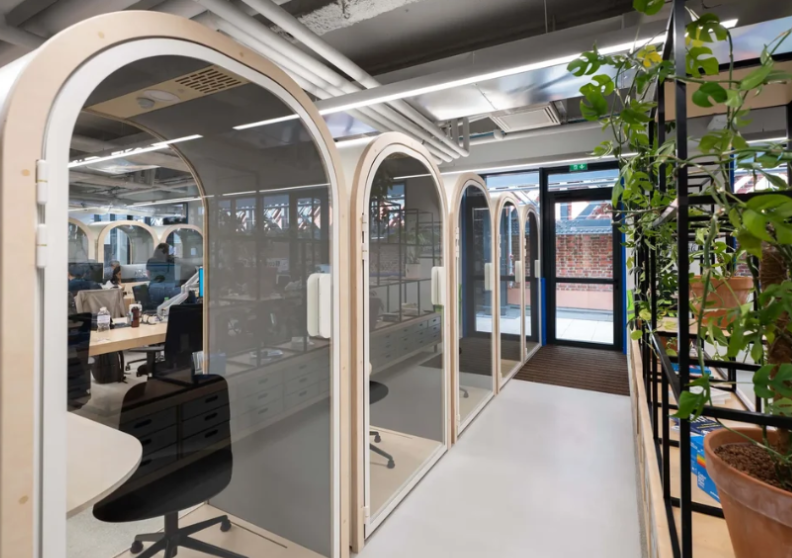
One of the fastest-growing investments among serviced office operators, landlords and coworking providers is the installation of acoustic meeting pods.
Whether they're designed for one person making confidential calls, two to four people collaborating, or six to eight people conducting client meetings, meeting pods have become an essential component of modern workplace design.
Importantly, they offer operators an attractive alternative to permanently fitting out dedicated meeting rooms or telephone booths, providing flexibility, lower capital expenditure and opportunities for additional revenue generation.
The Changing Nature of Office Work
The traditional office assumed that every employee had a desk and perhaps occasional access to a meeting room.
Today's workplace is very different.
Employees frequently:
-
Join Teams or Zoom calls.
-
Speak with clients confidentially.
-
Record webinars or podcasts.
-
Interview candidates.
-
Conduct sales calls.
-
Hold project discussions.
-
Need periods of uninterrupted concentration.
Open-plan environments are excellent for collaboration but often poor for privacy.
Without dedicated quiet spaces, employees end up taking important calls from corridors, kitchens or communal breakout areas, creating noise for everyone while reducing professionalism.
Meeting pods solve this problem elegantly.
Different Types of Pods
Telephone Pods
Single-person telephone booths are designed specifically for private calls and video meetings.
Typically featuring:
-
Acoustic insulation
-
Ventilation systems
-
Integrated lighting
-
Power sockets
-
USB charging
-
Small work surface
-
Occupancy indicators
These occupy little floor space but dramatically improve the usability of an open-plan office.
Rather than constructing multiple enclosed telephone rooms, operators can install several pods quickly with minimal disruption.
Single-User Office Pods
The next step up is the individual office pod.
These provide a fully enclosed workspace where someone can spend several hours working in complete privacy.
Typical users include:
-
Senior managers
-
HR professionals
-
Recruiters
-
Consultants
-
Lawyers
-
Financial advisers
-
Developers requiring concentration
-
Hybrid workers needing occasional privacy
For occupiers who occasionally need a private office but cannot justify leasing one permanently, these pods become extremely valuable.
Meeting Pods
Meeting pods range from compact two-person booths to enclosed meeting rooms accommodating eight or more people.
They typically include:
-
Large meeting table
-
Integrated screens
-
Power and connectivity
-
Ventilation
-
Acoustic treatment
-
Soft seating
-
Video conferencing capability
Unlike traditional meeting rooms, pods can often be relocated if office layouts change.
This futureproofs investment.
Why Flexible Office Operators Love Pods
Pods solve several operational challenges simultaneously.
Better Space Efficiency
Traditional meeting rooms require:
-
Permanent walls
-
Fire protection
-
Electrical work
-
Air conditioning modifications
-
Decorating
-
Building regulation considerations
Pods often arrive largely pre-assembled and can be installed within days.
Should the workspace be reconfigured later, they can usually be moved without major construction.
More Sellable Offices
Every square metre used for corridors and permanent meeting rooms reduces the amount of revenue-generating office space.
Pods allow operators to maximise lettable offices while still providing shared facilities.
Instead of dedicating 200 square feet to a meeting room serving one tenant, multiple pods can serve the entire building.
This significantly improves space utilisation.
Faster Fit-Out
Time is money.
Constructing permanent meeting rooms may take weeks.
Installing pods may take days.
New centres can therefore open sooner and begin generating income earlier.
Lower Capital Costs
Although premium pods are not inexpensive, they frequently cost substantially less than:
-
Building partitions
-
Mechanical alterations
-
HVAC modifications
-
Electrical installations
-
Interior finishing
-
Professional fees
In leased buildings this also avoids investing heavily in alterations that cannot easily be recovered at lease expiry.
Benefits for Occupiers
Occupiers gain far more than simply another place to sit.
Improved Privacy
Confidential conversations remain confidential.
This is particularly important for:
-
Legal firms
-
Recruitment agencies
-
Financial businesses
-
Healthcare providers
-
Professional services
Better Video Calls
Modern business increasingly revolves around Microsoft Teams, Zoom and Google Meet.
Pods provide:
-
Better acoustics
-
Better lighting
-
Reduced background noise
-
More professional appearance
Employees no longer need to apologise for noisy cafés or busy breakout spaces.
Increased Productivity
Research consistently shows that interruptions significantly reduce productivity.
Pods provide employees with an escape from distractions without requiring an expensive dedicated office.
Improved Employee Experience
Workspace quality increasingly influences staff attraction and retention.
Quiet spaces consistently rank highly in workplace satisfaction surveys.
Adding pods demonstrates that employers understand different working styles.
Shared Pods vs Dedicated Pods
Flexible workspace operators generally adopt one of two models.
Shared Building Pods
Installed within communal areas.
Benefits include:
-
Lower cost per occupier
-
Shared maintenance
-
Higher utilisation
-
Premium building amenity
-
Supports smaller tenants
This is common in coworking environments.
Dedicated Tenant Pods
Larger occupiers sometimes install pods inside their own demise.
Benefits include:
-
Guaranteed availability
-
Internal confidentiality
-
Enhanced employee experience
-
Reduced need for internal meeting rooms
Many operators now offer pods as an upgrade option during lease negotiations.
This can increase deal values without increasing floor area.
Monetising Meeting Pods
One of the most overlooked advantages is revenue generation.
Pods need not simply be an amenity.
They can become income-producing assets.
Hourly Booking
Operators charge:
-
£10–£25 per hour for telephone booths
-
£20–£60 per hour for small meeting pods
-
£50–£100+ per hour for premium meeting spaces
Pricing depends heavily on location and specification.
Membership Benefits
Premium memberships might include:
-
Monthly pod credits
-
Priority booking
-
Unlimited usage
-
Discounted hourly rates
This encourages upgrades to higher-value memberships.
Corporate Packages
Larger occupiers can purchase:
-
Reserved pod access
-
Monthly usage allowances
-
Dedicated pods
-
Branded pods
These become recurring revenue streams.
Visitor Meeting Space
Clients visiting tenants often require professional meeting facilities.
Instead of providing these free of charge, operators can include a monthly allocation with additional usage charged separately.
Event Support
Pods also support:
-
Assessment centres
-
Interview days
-
Temporary project teams
-
Training sessions
These generate additional ancillary income.
Understanding the ROI
Meeting pods should not simply be viewed as furniture.
They are operational assets.
Return on investment comes from several sources:
Increased Occupancy
Prospective tenants increasingly compare amenities before selecting a workspace.
A centre with modern meeting facilities often commands greater demand.
Premium Pricing
Operators offering better facilities frequently achieve higher desk rates than comparable buildings.
Additional Revenue
Hourly bookings can generate meaningful annual income.
Even modest utilisation can recover investment over a relatively short period.
Reduced Construction Costs
Avoiding permanent meeting rooms reduces fit-out expenditure.
Greater Flexibility
Layouts evolve as occupier requirements change.
Pods can usually be relocated, preserving capital investment.
Longer Customer Retention
Tenants are less likely to relocate when the building continues meeting their changing operational needs.
Improved retention significantly reduces acquisition costs.
Real-World Examples
Across the UK flexible workspace market, operators are increasingly integrating pods into their workspace strategy.
Premium coworking providers commonly position phone booths throughout communal areas, allowing members to step away from open-plan environments for confidential calls without leaving the workspace.
Enterprise-focused flexible office providers frequently install larger meeting pods that can be reserved via digital booking systems, enabling tenants to access professional meeting facilities without dedicating valuable floor space within their own offices.
Corporate occupiers adopting managed office solutions are also incorporating single-user office pods within their demise, providing private spaces for focused work, HR conversations or virtual meetings while maintaining largely open-plan layouts.
This approach is becoming particularly attractive for organisations seeking adaptable workplaces that can evolve as teams grow or working patterns change.
Choosing the Right Pod
When evaluating suppliers, operators should consider:
-
Acoustic performance
-
Ventilation effectiveness
-
Lighting quality
-
Accessibility
-
Sustainability credentials
-
Relocation capability
-
Warranty and maintenance support
-
Integration with booking systems
-
Power and data connectivity
-
Design consistency with the workspace brand
The cheapest pod is rarely the most cost-effective over its lifetime.
Final Thoughts
Meeting pods have evolved from a workplace novelty into an essential feature of modern flexible offices.
They address the realities of hybrid working, improve the occupier experience, support productivity and provide workspace operators with a practical alternative to expensive permanent construction.
Most importantly, they offer measurable commercial benefits. By improving space utilisation, reducing fit-out costs, creating new revenue opportunities and enhancing the overall appeal of a building, meeting pods can deliver an attractive return on investment while giving occupiers the flexibility they increasingly expect.
For landlords, serviced office providers and coworking operators looking to future-proof their workspaces, investing in well-designed acoustic pods is no longer simply a design decision - it is a strategic commercial investment that can strengthen competitiveness, increase customer satisfaction and generate long-term financial returns.