The Grey Property Market: Unlocking Value from Surplus Corporate Office Leases
The Hidden Opportunity Sitting Inside Corporate Real Estate Portfolios
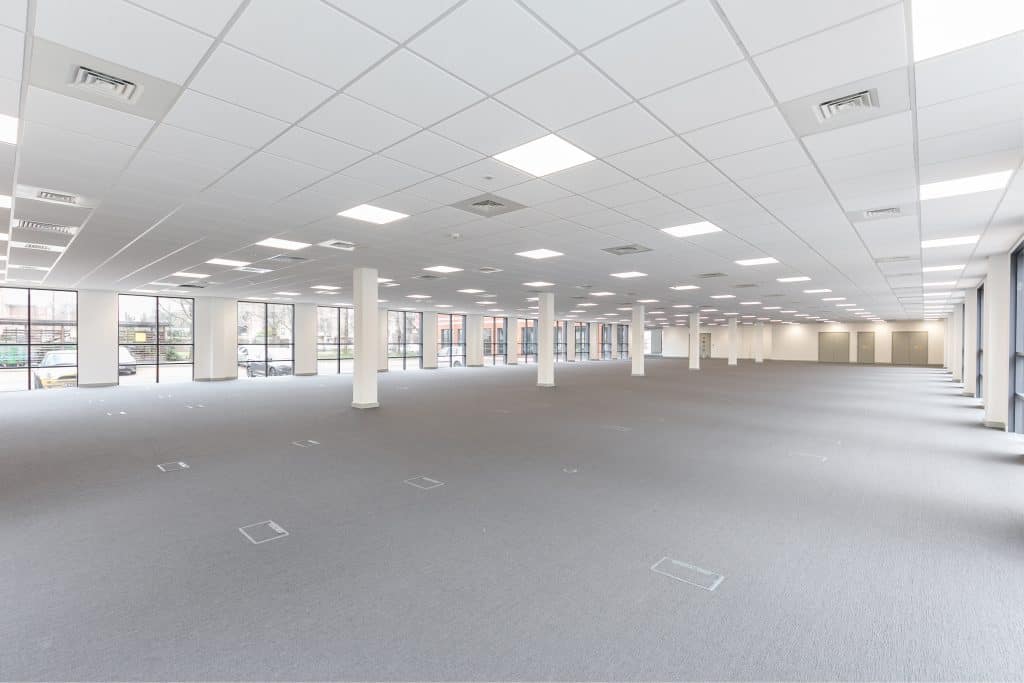
Across the UK, a significant but often overlooked property market is emerging: the grey property market.
This market consists of office space that is leased by companies but no longer fully utilised. These are not vacant buildings in the traditional sense. They are offices where the tenant remains legally committed to a lease but has reduced its occupancy requirements due to hybrid working, restructuring, relocation, technological change, or shifts in workforce strategy.
For many occupiers, these surplus spaces have become a growing financial burden. Rent, service charges, business rates, utilities and maintenance costs continue regardless of utilisation levels. What was once an essential operational asset can quickly become a liability.
However, a growing number of organisations are discovering that these underused spaces can be transformed into flexible office environments that generate revenue, reduce occupational costs and create long-term value.
Rather than viewing surplus space as a problem, forward-thinking occupiers are beginning to treat it as a commercial opportunity.
Why the Grey Property Market Exists
The emergence of the grey property market is largely a consequence of the transformation in workplace behaviour over the last five years.
Hybrid working has become a permanent feature of business operations. Research across the UK office market shows that office attendance patterns have stabilised at levels significantly below pre-pandemic norms, while many businesses continue to adopt flexible workplace policies. Occupiers increasingly seek agility rather than committing to fixed workplace footprints.
Many organisations signed leases when:
-
Headcounts were larger
-
Five-day office attendance was standard
-
Future growth projections appeared certain
-
Flexible workspace options were limited
Today, many of those assumptions no longer apply.
The result is a growing stock of partially occupied offices where companies may only require 50%–70% of the space they currently pay for.
At the same time, lease obligations often extend for many years, creating a mismatch between occupancy needs and contractual commitments.
The Rise of Flexible Workspace Demand
The growth of flexible workspace is not a temporary trend.
Across the UK and Europe, flexible office inventory continues to expand as occupiers increasingly favour agility, shorter commitments and fully managed environments. Research shows demand for flexible space continues to rise, with larger businesses now becoming significant users of flex products rather than just start-ups and freelancers.
Companies increasingly want:
-
Shorter commitments
-
All-inclusive pricing
-
Immediate occupation
-
Scalable workspace solutions
-
High-quality amenities
-
Reduced capital expenditure
Many occupiers no longer want to commit to traditional leases of five, ten or fifteen years.
This shift has created an opportunity for leaseholders holding surplus space.
Instead of simply attempting a conventional sublease, occupiers can reposition underused floors or buildings as flexible workspace products.
From Cost Centre to Revenue Generator
Traditionally, a company with excess office space had three options:
-
Leave it empty.
-
Seek a conventional subtenant.
-
Negotiate a lease surrender.
Today there is a fourth option:
Convert the space into flexible offices.
This can be achieved through several structures:
Direct Management
The leaseholder creates and operates its own flexible office business.
This approach offers maximum revenue potential but requires operational expertise in:
-
Sales and marketing
-
Community management
-
Customer service
-
Facilities management
-
Technology infrastructure
Management Agreement
The leaseholder partners with a specialist flex operator who manages the space on their behalf.
This model allows the occupier to retain control of the asset while benefiting from operational expertise.
Revenue Share Arrangement
A workspace operator takes responsibility for running the facility and shares revenues with the leaseholder.
This can create income streams while minimising management obligations.
These structures are becoming increasingly common as businesses seek alternatives to traditional subletting.
Why Flexible Space Often Outperforms Conventional Subletting
A conventional sublease typically involves securing a single tenant at a discounted rent.
The challenge is that demand for large office suites remains relatively subdued in many markets, particularly for older buildings and oversized floorplates.
Flexible workspace changes the economics.
Instead of renting 10,000 square feet to one occupier, the same space can be divided into:
-
Private offices
-
Team suites
-
Meeting rooms
-
Hot desks
-
Coworking areas
-
Event spaces
This creates multiple revenue streams from the same footprint.
For example:
A 10,000 sq ft floor might support:
-
Twenty private offices
-
Fifty dedicated desks
-
Shared coworking memberships
-
Meeting room hire
-
Virtual office services
The aggregate revenue generated can substantially exceed a single conventional sublease.
While operational costs are higher, the revenue potential is often significantly greater.
What Returns Could Be Achieved?
Every building is different, and returns depend on:
-
Location
-
Building quality
-
Lease terms
-
Fit-out standard
-
Occupancy levels
-
Operating model
However, the economics can be compelling.
Consider a simplified example:
Traditional Position
20,000 sq ft office
Annual lease cost: £500,000
Space utilisation: 40%
Unused area: 12,000 sq ft
Annual cost burden on unused space: approximately £300,000
Flexible Workspace Conversion
Unused 12,000 sq ft converted into:
-
Private offices
-
Meeting rooms
-
Dedicated desks
At a conservative average revenue equivalent of £450–£500 per desk per month outside London, and significantly higher in London, annual gross revenues can exceed the equivalent rent being paid on the space.
Even after accounting for:
-
Staffing
-
Marketing
-
Technology
-
Cleaning
-
Utilities
-
Management fees
Many operators target margins capable of materially offsetting lease liabilities.
In many cases, occupiers have transformed surplus space from a six-figure annual cost into a positive income-producing operation.
Why Now Is the Right Time
Three trends are converging.
First, businesses continue to right-size their office footprints.
Second, demand for flexible workspace continues to grow.
Third, traditional leasing markets remain challenging for larger secondary office spaces.
These conditions create an ideal environment for innovative occupiers to rethink how they use their leased assets.
The question is no longer whether surplus office space exists.
The question is how effectively it can be monetised.
The Strategic Conversation Every Leaseholder Should Be Having
Many companies continue to view surplus space as a temporary problem that will eventually resolve itself.
In reality, hybrid working patterns have become embedded in the modern workplace.
Waiting for full utilisation to return may not be a viable strategy.
Leaseholders should be asking:
-
How much space do we genuinely need?
-
How much of our lease liability is tied to underused areas?
-
Could part of our building be repositioned as a flexible workspace?
-
Would a management agreement outperform a traditional sublease?
-
Could we generate income while retaining future expansion capacity?
For many organisations, the answers could reveal a substantial untapped opportunity.
Conclusion
The grey property market represents one of the most significant opportunities currently emerging within commercial real estate.
Across the UK, thousands of businesses are paying for office space they no longer require. Yet the same market conditions creating this challenge are also creating the solution.
Demand for flexibility, shorter commitments and managed workspace continues to grow. Businesses seeking agility increasingly favour flexible offices over conventional leases.
For leaseholders, this presents a compelling opportunity to transform surplus space into a productive asset.
What was once an underutilised liability can become a revenue-generating workspace.
The most successful occupiers over the next decade will not simply reduce their property costs. They will actively unlock value from the space they already control.
For organisations holding large, underused office leases, the time to explore that opportunity is now.