Airbnb Is Coming for Coworking. What Does It Mean for the Flexible Office Industry?
Airbnb is moving into coworking - and the implications for the flexible office industry could be much bigger than the initial announcement suggests.
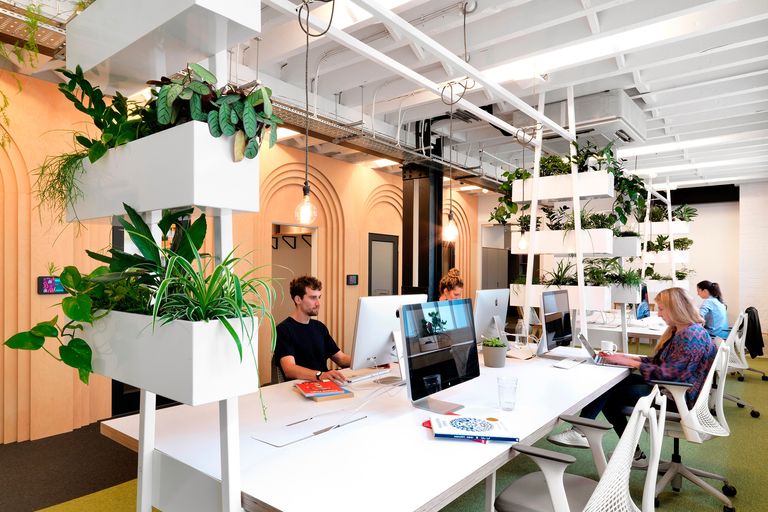
In July 2026, Airbnb began testing coworking bookings in the UK, with operators including Oneder and Work.Life making selected coworking spaces, day passes and meeting rooms available to book through the Airbnb platform.
This is an interesting development.
But I think the bigger story is why Airbnb is doing it - and what it tells us about where the flexible workspace market is heading.
Airbnb isn't really becoming a coworking operator
Airbnb isn't opening coworking centres.
It is doing something potentially more powerful:
It is becoming a marketplace for workspace.
That distinction matters.
Airbnb has spent years building one of the world's largest marketplaces for travel accommodation. More recently, it has been deliberately expanding beyond accommodation.
Its 2026 Summer Release added car rentals, grocery delivery, airport transfers, boutique hotels and additional experiences and services. Airbnb says the objective is to make the platform useful for more of the travel journey - not simply the accommodation component.
Coworking fits that strategy perfectly.
Imagine the journey of a modern business traveller:
Book flight → Book Airbnb → Book airport transfer → Book dinner → Book experience → Book coworking space → Book meeting room.
Airbnb wants to own as much of that journey as possible.
And that should make every flexible-office operator sit up and take notice.
Why has Airbnb done this?
There are several reasons.
Work and travel have become increasingly intertwined
The traditional distinction between a "business trip" and a "leisure trip" is becoming less clear.
People travel for work, stay for the weekend, work remotely while travelling, meet clients while away and combine business with leisure.
Airbnb recognised this trend several years ago.
In 2022, the company launched its "Live and Work Anywhere" initiative, explicitly identifying the growing number of people who were no longer tied to a particular workplace or location.
Coworking is a logical extension of that behaviour.
If someone is staying in Manchester for three days but doesn't want to work from their Airbnb every day, why shouldn't Airbnb help them find a workspace?
Airbnb wants to increase the value of every customer
This is perhaps the most important commercial reason.
Airbnb already has enormous traffic from people who are travelling.
The question is:
What else can Airbnb sell to those people?
Accommodation is purchased relatively infrequently.
Services and experiences create additional opportunities to generate revenue from the same customer.
A £25 coworking day pass may not look particularly significant.
But multiply that across millions of travellers, and the economics become much more interesting.
Airbnb doesn't need to own the workspace.
It doesn't need to employ receptionists.
It doesn't need to fit out buildings.
It simply needs to connect demand with existing supply and take a transaction fee.
That's the marketplace model that made Airbnb successful in accommodation in the first place.
And this is where it gets interesting for coworking operators
For operators, Airbnb could become a significant new distribution channel.
Historically, coworking operators have generated customers through:
-
Google
-
their own websites
-
brokers
-
property marketplaces
-
referrals
-
corporate relationships
-
local marketing
-
walk-ins
-
existing members
Now another route is emerging:
Airbnb.
That potentially puts a flexible workspace in front of a completely different audience.
A person searching Airbnb for accommodation in London may never have searched Google for "London coworking day pass".
But Airbnb can put a workspace in front of them at exactly the moment they need it.
That's powerful.
But there is a potential downside
There is a danger that coworking operators become increasingly dependent on third-party marketplaces.
We've seen this happen in other industries.
Hotels rely on Booking.com and Expedia.
Restaurants rely increasingly on delivery and reservation platforms.
Consumers become accustomed to searching through a marketplace rather than going directly to individual suppliers.
The marketplace gains the customer relationship.
And potentially, the marketplace controls the demand.
That creates an interesting question for coworking operators:
Are you building your own customer base - or simply supplying inventory to somebody else's marketplace?
If Airbnb becomes a major source of workspace bookings, operators will need to think carefully about customer acquisition costs, commissions, repeat bookings and ownership of the customer relationship.
Airbnb could also change how people perceive coworking
This may be the most interesting consequence of all.
For many people, coworking is still something you deliberately go looking for.
You search for:
"Coworking space near me."
Airbnb could change that.
Coworking could become an amenity of travel.
Much like Wi-Fi, parking, breakfast or airport transfers.
The question becomes:
"Where am I staying - and where can I work while I'm there?"
That is a very different proposition.
It also reinforces the importance of day passes
The Airbnb model is particularly well suited to flexible workspace products that can be bought easily and immediately.
For example:
Coworking day pass Meeting room for 2 hours Private office for a day Podcast studio Boardroom Event space Virtual meeting room
These are highly transactional products.
They don't require a six-month sales process.
They don't require a complicated contract.
They are essentially bookable inventory.
And that could be a huge opportunity for flexible-office operators.
What does this say about the future of the industry?
For me, there are five important signals.
Workspace is becoming a service
The industry is moving away from simply selling square feet.
The product is increasingly:
access + flexibility + technology + hospitality + community + services.
That makes coworking much closer to hospitality than traditional commercial real estate.
And Airbnb entering the market reinforces that trend.
Distribution is becoming as important as location
Historically, the mantra in property has been:
Location, location, location.
For flexible workspace, it may increasingly become:
Location + product + distribution.
Having a great workspace isn't enough.
You need to make it incredibly easy for customers to discover and book it.
Every spare desk becomes potential inventory
The traditional office model is built around long-term occupation.
The flexible model allows space to be monetised in multiple ways.
A meeting room might be:
-
used by a member at 10am
-
sold as a day office at 2pm
-
used for an event in the evening
The same square metre can generate multiple revenue streams.
Marketplaces such as Airbnb potentially accelerate that trend.
Hospitality is becoming a competitive advantage
If workspace is being booked alongside hotels, apartments, restaurants and experiences, operators will increasingly be judged on the quality of the customer experience.
That means:
Reception matters. Service matters. Design matters. Technology matters. Speed matters. Reviews matter.
The best flexible offices are beginning to look less like traditional offices and more like hospitality businesses.
The office is becoming an on-demand service
Perhaps the biggest takeaway is this:
People increasingly want access to workspace rather than ownership of workspace.
They don't necessarily want a desk permanently.
They want somewhere to work when they need it.
That might be:
-
near home on a Tuesday
-
near a client on Wednesday
-
in another city on Thursday
-
at an airport on Friday
The future workplace may therefore be less about "Where is your office?"
And more about:
"Where do you need to work today?"
The bigger opportunity may actually be for landlords
There is another group that should be paying attention:
Commercial property owners.
If coworking becomes increasingly transactional, buildings could potentially monetise space in ways that were previously impossible.
A landlord doesn't necessarily have to lease every square foot on a 10-year lease.
Parts of a building could potentially be operated as:
Private offices + managed offices + coworking + meeting rooms + event space + day offices.
And the technology and distribution infrastructure is increasingly available to sell that space dynamically.
Airbnb's entry into coworking is therefore another signal that commercial property is becoming more flexible, more service-led and more digitally distributed.
My prediction
I don't think Airbnb's entry into coworking will destroy the established flexible-office operators.
Quite the opposite.
I think it could grow the market.
It introduces coworking to millions of people who may never previously have considered using it.
But it will also expose operators to a new reality:
The best workspace doesn't automatically win. The easiest workspace to find and book may win.
Operators should therefore be thinking about their distribution strategy just as seriously as their property strategy.
Airbnb has demonstrated that it understands something fundamental about the future of work:
People don't necessarily want an office. They want access to the right workspace, in the right place, at the right time.
And if Airbnb can become the platform that helps them find it, the implications for the flexible office industry could be substantial.
The next battleground in coworking may not be who has the most desks.
It may be who controls the customer relationship.